Saturday, 10 November 2012

The Information Age has its effects on education by its constant change point of view.

High technology alters the goals of education in this planning model. 
Can educators manage all this change well?

Trends of the Information Age: 
Is the goal of public education always social change? 

by Tom Thorne

Four of my five children ranging in age from 42 to 23 are teachers. This gives me a unique opportunity to see first hand what teaching and education is all about these days. At family events I listen to their discussions with interest. When I relate my experiences in the schools of my time I am treated as a aging curmudgeon who still believes in instilling students with personal discipline and leadership principles. I am an educational fossil in their eyes. 

My experience as a 16 year veteran of teaching at a college during the establishment and growth of personal computing and the Internet gives me a unique perspective I keep telling them. I point out that I can remember a time when there were no personal computers and how their introduction has greatly altered life on this planet. Yes, dad, they respond we’re certain that is true but look at what we as teachers deal with today. That is what really counts. 

They tell of the increase of special needs students in their classes. I point out often to deaf ears that in a high technology environment where the focus is on the individual the growth in numbers of special needs students is inevitable. Special needs is a product of an information oriented society where everyone’s needs are categorized into finely honed definitions of one syndrome or another. With more information you get a tighter focus on the person and their personal needs. And the technology to do this work is the personal computer tied into the Internet. The techniques define how we think. The “medium is the message”. They all sigh.

The schools I went through before the Information Age really took root, were mass education institutions. They reflected their society too and the focus was on “fitting in” to a mould and surrendering your individuality to the common good. If you were out of step with mass education objectives of fitting in you simply failed, left school and started work. Special needs didn’t exist  except as a separated Opportunity Class. In fact the concept  special needs integrated into the regular classroom was not possible because the information about the various special needs syndromes, if they existed at all, were still in the hands of un-networked experts.

Mass education was not at all tolerant of individuals or unique people. If you were bright and had original thoughts you were chastised into a category of a “trouble maker”. If you were challenged intellectually you went to special classes and even schools. You would be paraded to the principal’s office and told to fit in or else.  I know this from sad experience and I fitted in as needed to get my high school diploma and my ticket to university.

It is my contention that education is now developing into a social change laboratory. In the old pre information age system education was seen as a place to discipline people into good citizens with some notion that the common good of society was a worthy goal of the system. It was all a bit rigid but at least we could all do numbers, write a paragraph and spell properly which sadly is no longer the case.

Now the education system is highly individualized. The common good of society has been replaced by the need for the individual to feel good about themselves. This change is only possible in a high technology society like the one we have forged over the last 30 years. This concept of the individual is a direct outcome of the techniques that make it possible to manage information found at everyone’s finger tips.

When mass education is replaced by personal education plans then the common good drops in value. The individual is more important than the common good. It creates entitlement and rights and the paramount of the individual’s needs over the common good. It swings the pendulum of change a way over from the centre. It builds anticipation that society can provide each individual with their needs. Its worst incarnation is the growth of political correctness and the dropping in value of the common good.

My teacher daughters also tell me about the stresses and strains this is creating on the contemporary classroom and I wonder how this situation makes students aware of their social obligations and the common good of society. Today educators are in a state of transition to some other delivery system other than the classroom. What kind of society that will build is anyone’s guess but the medium is always the message.

© Copyright 2012, Tom Thorne, All Rights Reserved.

Tuesday, 6 November 2012

Economic stagnation in US means whoever wins the US Presidential Election has his hands full.

Who ever wins today has the same job to do.


The US Presidential Election: a prediction about implications for Canada. 

Canada needs a strong United States so we can keep China off our natural resources. 

by Tom Thorne

It’s Election Day in the US. President Barack Obama will likely remain President of the United States for a second term. Governor Mitt Romney will do very well but when the dust settles in the Electoral College, Barack Obama will squeeze by with enough states siding with him to just make it. The magic number of Electoral College votes needed is 270. The closeness of the vote says that the US is polarized and no clear set of policies for economic reform are apparent from either candidate.

There is probably very little difference for Canada whether Mitt Romney or Barack Obama becomes president. That’s because of the US Senate and House of Representatives remain  in political grid lock. A Democrat dominated  Senate and a House of Representatives ruled by Republicans will likely be retained after today. 

The real threat to Canada is not who is in the White House but what they do about the mounting US Government debt now at $16 Trillion plus. To this point there is no will apparent to cooperate for a solution.

If the US literally prints its way out of its economic mess, the mess will be compounded.  Such an action is guaranteed to create inflation and a rise in interest rates charged to service the debt and also generally for business and lenders of all kinds. The US may be called an economic basket case like Eurozone countries who overspend. Lenders will want more interest to cover the risk of carrying US Government debt loads expressed in diluted valued bonds and currency.

Serious debt reduction is needed in the US Congress and Administration.  And there is very little wiggle room to cut US government expenditures. However failure to do so will mean in the middle range of time that the US will become more and more an economic lightweight and hence its world presence will be diminished. That is bad for Canada.

The current financial situation faced by the US offers powers such as China immense strategic clout on the world stage. That is what the Chinese Government wants today as they also choose their new slate of leaders behind closed doors. The US is making itself militarily and financially vulnerable. Canada, no matter how well we manage our financial affairs, will be forced into the same situation as our major trading partner.

It will be tougher for Canada to retain our natural resources.  Potential deals like the Chinese State taking over Nexen in our oil sands, will become more likely if we want to maintain our own economic performance independent of a financially errant US. We need to sell our oil to the US not to China. President Obama nixed the pipeline to US markets for domestic political reasons that deal needs to come back on the table if he is re-elected. Mitt Romney says he will bring back the Canadian pipeline to the US.

It really is time for the United States Government and its politicians to bite the economic bullet. Failure to do so means a downsizing of the United State’s influence on the world stage and that can only mean that Canada will need a more independent economic policy as China grows in influence. In short the lack of action on the economic front by our major trading partner is taking us more to Europe and into the arms of the Chinese Government’s hegemony.

© Copyright 2012, Tom Thorne, All Rights Reserved.   

Tuesday, 25 September 2012

Will Premier Pauline Marois tell us how a separate Quebec will work on the world stage?

Is Premier Pauline Marois striking a presidential pose?


Pauline Marois doesn't seem to realize that a separate Quebec is not in her mandate from the voters. So why the jabs against Canada starting with the swearing in ceremony of her cabinet?

by Tom Thorne


As I predicted, newly minted Quebec premier Pauline Marois is already spreading the ever vague doctrine of Quebec separatism. For Madame Marois it is like being in a separatist candy store now she has the top Quebec political job.  Lots of promising sweets to try or so she thinks.

Well I hate to deflate Pauline Marois' separatism sweet tooth.  The candy store contains lots of sour candy too. Most of the sour candy is the economy, health care and underfunded education at all levels and in particular in higher education where she is duty bound to maintain Quebec’s low tuition rates after she pandered to student protesters in the recent election. 

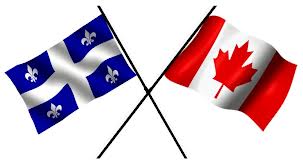
Her first action at the National Assembly was to remove the Canadian Flag from the swearing in ceremony of herself and her cabinet ministers. Yes, only the Quebec flag was present as a tangible symbol that things have changed. It is an act that is more  gauche than a statement for separatism. It demonstrates the mean spirit of separatists.

Despite this silly Canada snub, things have not changed. Quebec remains in Canada and to swear in her cabinet she had to involve the Lieutenant Governor of Quebec who  is a institution not only of Canada and Quebec as a Canadian province but for Pauline Marois a reminder perhaps of how she despises the Monarchy as a symbol of alleged oppression.

Next she will want to remove the Crown from the Royal arms in the National Assembly. We all know too well that Madame Marois is against the Monarchy. However, she has to swallow the Monarchy pill to become premier. The Crown is a strong enough institution to bear and even swear in separatists who are its avowed enemies.

So not including the Canadian Flag at this event does little to change anything except to show clearly the separatist lack of decorum and connection with the full history of Canada and Quebec's institutions. Her action should have been refused by the Lieutenant Governor. We'll see at the upcoming opening of parliament in the National Assembly whether both flags are present during the speech from the throne.

Pauline Marois' brand of separatism seems to rely on the cut here, a jab there, or a mindless comment off the cuff to promote separatism. Eventually, she hopes, we all expire from a thousand insults and her rounds of gaucheness. Actually her actions are seen  as a ho hum moment in Quebec history and a shabby farce for many thoughtful Quebeckers.

If she is so keen a separatist let her lay out her plans for a separate Quebec in detail. Are we to have the Republic of Quebec?  And who will be the head of state to replace the Lieutenant Governor in this brave new separatist world? Will it be some aging Parti Quebecois hack or a distinguished Quebecker whose political credentials will not matter because he or she will have the respect of Quebeckers? Will the new separatist state have a President who is head of state but also elected? Will there be a Prime Minister doing Pauline Marois' current job?

Why not come clean and layout what will replace the Queen's representative since Madame Marois dislikes the current office so much. The truth is if the separatists show how they would organize a separate Quebec into a republic they would have to really show Quebeckers and the rest of Canadians how they would do it. I challenge them to do this so we all know where they propose to take Quebec if they ever win a referendum for separation.

Of course they won't ever lay out this aspect of a truly separated Quebec state because the reality of "separatism" is really a sad political ploy to keep Ottawa off side and to be a province with special powers, not only the powers contained in the unsigned federal Canadian Constitution but the extra stuff they want if we are to keep them in Canada. 

The provincial  Parti Quebecois threatens separatism as a way to get more from Ottawa. It's federal political manifestation, the Bloc Québécois was crushed in the last federal election by the New Democratic Party (NDP) and it had much the same aim as the Parti Quebecois. When asked what they want they always answer vaguely, "whatever is good for Quebec". Quebec voters have been telling them the answer for years. Canada is good for Quebec.

The best electoral response the separatists can muster is about a 30 percent of Quebeckers. Many of these people are Quebec nationalists who in a pinch will not vote for separating Quebec from Canada. So the real hard core separatists amount to very few people in Quebec and if you are  Parti Quebecois premier you pander to them so at party conventions your leadership is not challenged. 

Also among hard core separatists there is very little agreement. Some are moderates that are really Quebec Nationalists. Some are single issue people. Some are simply like former premier Jacque Parizeau sad old men with no hope of seeing a separated Quebec in their lifetime. Lucien Bouchard bounced from federal Conservative politics into the Parti Quebecois premiership seemingly having finally got his separatist mojo in order.  He also fizzled.

My point is all these separatists have yet to make a good argument for Quebeckers to make the break with Canada. They never spell out what the Republic of Quebec will be like and how it will relate to Canada, the USA and the rest of the world. In short there is no plan, no real agenda that is not soft when it comes to the details of separating from the rest of Canada.  In a word separatists are tiresome.

© Copyright 2012, Tom Thorne, All Rights Reserved

Saturday, 8 September 2012

Pauline Marois and the Parti Quebecois can have a fantasy about separatism for a few days.

The Parti Quebecois' worst nightmare.

Quebec election aftermath. Pauline Marois is the new premier of Quebec and independence and separatism becomes a card to play again in hard bargaining with Ottawa.

by Tom Thorne

It was predictable. The Parti Quebecois (PQ) received a minority government mainly because the electorate was tired of the Jean Charest Liberals after three mandates and almost ten years at the helm. The pending scandal hearings may also have played a role, but the numbers of Liberals returned (50) indicates that may be a smaller issue.

The electors, however, wisely tethered out a short rope to Pauline Marois and the PQ at 55 seats in the National Assembly. Any notions of separatism can only now be put on hold with a popular vote is 32.1 percent. PQ members with with  separatist pangs will be frustrated. Hard nosed separatists will be irritated that “mon pays” must remain a dream, yet again. However it won’t stop a Parti Quebecois propaganda war with Ottawa.

Pauline Marois’ new government will have to focus on the economy, education and health care. The PQ will now be faced with the tuition problem and the previous Charest legislation and I predict that despite what Madame Marois said during the election tuitions for post secondary education will rise under her administration if her government lasts long enough. Also she has no mandate to rescind the Charest legislation.

And how tough can she really be with the Federal Government? Marois will, of course, use Prime Minister Stephen Harper as a lightening rod for her pronouncements of getting what Quebec needs, wants or desires. Harper’s stoney angloness will be compared to her latin passion for a lost cause.  Harper, by the way, is equally stoney faced to all Canadian provinces.

What new demands can she make that Quebec provincial governments don’t already have? Quebec governments already have versions of many federal programs and a stronger say in immigration policies than any other Canadian province. The only real appeal separatist have is a nationalistic notion of a French identity in North America and as I keep saying that is well established and protected by the Canadian Constitution. Quebec has yet to sign the Constitution and that signing is overdue.

There is no threat to anyone’s identity. It is really time to settle down as a integral part of Canada and realize that we all have a shared history, shared institutions and our provincial identities within the Canadian federation make us all better.

French speaking Quebeckers, once they get out of Quebec into the rest of Canada realize that this country is much more than a regional nationalism. The same is true for English Canadians visiting Quebec. When Quebeckers accurately examine their history and their considerable contribution to the Canadian fact, they gain a new identity that although still Quebecois is also Canadien. 

Conceive of a Canada without Quebec. I can’t do it. It is an idea that is so unthinkable that it denies our common origins. It is truly time to grow up and recognize Canada as  our first orientation positively seasoned by our regional cultures. 

If Quebec did separate and become a nation state what would be the outcome? Clearly its economic associations with the rest of Canada would remain intact.  Quebec would probably use the Canadian dollar because floating a new currency would be foolhardy. How much independence would they get if they took on the American dollar or worst yet joined the Eurozone.

I really don’t know what is inside the heads of Quebec separatists. They want “sovereignty association” with the rest of Canada. That means getting the benefits with independence. They want a separate state in North America with all the costs associated with that. They are already members of the Francophonie the organization of French speaking countries with special considerations from the Federal Canadian Government that they can be there.

Their Francophonie membership is akin to the Canadian Federal Government allowing English speaking Canadian provinces to be separate members of the British Commonwealth. How much more independence do you need?  A separate Quebec would have to establish and maintain embassies abroad. How different would their stance be on the world stage from Canada’s?

How would the Americans treat an independent Quebec?  How would this affect NAFTA and other free trade provisions Canada has with the United Staes and Mexico? Quebec independence could open up renegotiations on a lot of international agreements.  Quebec separatism is simply a bad idea. 

© Copyright 2012, Tom Thorne, All Rights Reserved.

Saturday, 1 September 2012

A minority government for Quebec. Charest Liberals are the best alternative.


The Quebec election is a mish mash of separatist hopes and dreams contrasted with the social realities of making the province actually work each day.

Although Quebec voters are tired of the Jean Charest government after three terms they are smart enough to know that they can't let anything silly happen on 5 September. That's why they will reward Charest with a minority and if they want more risk they will allow Pauline Marois to form a minority government.

It will be a surprise if there is a majority government  of any stripe especially for Marois' Parti Quebecois. The spoiler is Francois Legault who is the leader of the newly minted and untried Coalition Avenir Quebec party.  Legault of course has Parti Quebecois experience as the ministers of education and health when they were last in power. 

Apples rarely fall too far from their tree, but Francois Legault says he has lost his orientation to Quebec sovereignty and especially separation from Canada. He campaigns on a scandal free Quebec which asks Quebeckers to dump Jean Charest's Liberals for clean government. He is using the White Knight gambit in this election.

The only true federalist party in Quebec is the Liberal Party which means that voters are faced with a fourth term for Jean Charest if they clearly want that option. That may be the problem. Charest has tired out the Quebec electorate by being in power too long and now with scandals lurking waiting to surface it’s hard to trust another round with the Liberals. That's too bad for federalists because it means an opportunity for separatism  ( I never use vague terms like sovereignty) to surface.

Pauline Marois has already stated that she will make life hard for the Government of Canada and particularly her nemesis, Prime Minister Stephen Harper if she becomes the next Premier of Quebec. It's easy to use Stephen Harper as a foil because his government is seen as a negative force for Quebec's separatist ambitions.  That sounds very good to Quebec nationalists and those of a separatist bent but it does little to improve the day to day lives of Quebeckers.

Here is what you get with separatists in power at Quebec City. Certainly more propaganda problems with the Federal Government to make points about the alleged "special needs of Quebec". The only problems is the "needs" are rarely clearly defined and are mostly designed to lead to the ultimate goal which is to separate from the Canadian Federation.

If Pauline Marois brings her seething Parti Quebecois to power, even in a minority, inside the party lurk separatists waiting for a power opportunity . The pressures on Pauline Marois will be immense to advance the separatist cause. She will have to keep the lid on these people. If Marois waffles about separatism, and the separatists don't get their way, the Parti Quebecois will begin its usual internal fragmentation exercise as the moderates fight it out with the hard nosed separatist elements. That is usually a good thing for federalism.

Of course Parti Quebecois infighting always interferes with the real daily needs of the Quebec people. We've seen this scenario before. The moderate versus the hard nosed separatist elements of the Parti Quebecois fighting among themselves. Francois Legault is a result of this infighting. As a former harder nosed separatist, Legault surprises many of his former separatists by his current stance for the his new Coalition Avenir Quebec party. Former Parti Quebecois premier, Bernard Landry recently commented about Legault's turn around from separatism with some surprise.

So where do we stand for the election on 5 September?  A  minority Parti Quebecois government will work with the Coaltion Avenir Quebec members who are elected to perhaps manipulate a "nationalist" coalition into a majority government. We know that a Jean Charest minority will not work with separatists, and since no one will want another election right away separatist ambitions will be somewhat cooled for perhaps two years. 

The Quebec electorate will be the final judge. They will award a minority because they want and need good solid government that will work for their needs such as the economy, education and health care. There is little interest in a separate Quebec state in North America, not now or in the future by the people of Quebec.  

© Copyright, Tom Thorne 2012, All Rights Reserved.

Tuesday, 21 August 2012

Parti Quebecois leader Pauline Marois pretends that separatism is still an option for Quebec. Separatism is a bankrupt idea when you examine history.

Trudeau's rigorous presentation against Separatism 
made separatist arguments look small and petty.


Parti Quebecois leader Pauline Marois blames the monarchy for Quebec ills. The Marois grasp of the historic  place of Quebec in the formation of the Canadian federation is clearly lacking. Her separatist rhetoric glosses over 250 years of combined history.

Even in death former Canadian prime minister Pierre Trudeau makes the hearts of Quebec separatists skip a beat. Pierre Trudeau of course thought that Quebec separatists were bankrupt of any positive ideas but as a Canadian constitutional expert he held this view in a historical context.

Certainly the role of the British monarchy in the formation of Canada was a seminal change for Quebeckers. In 1763 the British Monarchy was part of the package that came with the Treaty of Utrecht. That treaty set the Canadian state in motion, first as a British colony and later as provinces operated by responsible elected governments.

The British Crown was at the core of all these changes and since Canada to this day remains a constitutional monarchy, the Quebec National Assembly is an integral part of this development. They have a Lieutenant Governor, who represents the Queen and who opens parliament like any other Canadian province.

The Treaty of Utrecht ended the war between England and France and one of the side events of that treaty was created by the outcome of the war waged in the St. Lawrence river valley that gave Britain Quebec after the Battle of the Plains of Abraham in 1759. The 1763 treaty however provided  the following assurances to Quebeckers.

First they were guaranteed their language and culture. Second they got to keep their system of civil law rather than having to adopt the British Common Law, and lastly they were guaranteed their freedom to be Roman Catholics, which given the British internal wrangles on this front in 17th and 18th Centuries, was a very reasonable concession.

Pierre Trudeau always reminded Quebeckers of their connections to the Treaty of Utrecht that they have always been seen as a special case within the British system. In addition, all these rights were folded into the British North America Act (BNA) in 1867 the act of the British Parliament that created Canada.

When Trudeau brought the BNA home by asking the British Parliament to release it into Canada's parliamentary care, Quebec refused to sign for its repatriation. Trudeau felt that over time Quebec would see the virtue of bringing the BNA home. 

However, the BNA was brought to Canada and that includes all the history that goes back to the Treaty of Utrecht. So the question is how distinct can a Canadian province can be from the rest of Canada and be in the Federation? Quebec is clearly the model. 

When politicians at the federal and provincial level wanted to toy with the provisions of the BNA with wishy washy provisions such as the Meech Lake Accord, Pierre Trudeau, naturally was opposed. All that makes Quebec unique is contained in the BNA which of course is the Canadian Constitution.

Pauline Marois must know that Quebeckers retain their separate civil law, they maintain their language and culture which is enhanced by Canadian bilingualism at the federal level. The fact that they have turned away in droves from the Catholic Church is a choice they have made, and they of course, have the right to make that choice.

So when a separatist attacks the monarchy as a way to generate contempt for the Canadian federation, they should do so realizing that their parliamentary system and their democracy is guarded by the monarchy and that has been the case since they experienced British traditions and compromise that preserved their language, law and if they want it Roman Catholicism. 

Pauline Marois, the current Parti Quebecois leader, of course denies anything that makes her bankrupt notions of separatism look flimsy and without value. She and her separatists resort to Quebec Nationalism which is well known for its flag waving but lack of logic and historical sense about Quebec's association with the British Crown and its parliamentary institutions.

Separatism at its core is an idea without merit. It tends to use emotional appeals and senseless arguments to make its points. It always forgets the provisions of the BNA.  Separatists always rely on the propaganda that Quebec has been held down by the rest of Canada. 

That doesn't mean that in the past there have been problems but now we have grown up in Canada and no one of any consequence can support a separate Quebec because all issues can be dealt with by the democratic institutions we have all developed as Canadians. 
  

© Copyright 2012, Tom Thorne, All Rights Reserved. 

Friday, 3 August 2012

Jean Charest is right to go to the ballot box. It is put up or shut up time for Quebec protests.

Will this protest translate into Parti Quebecois votes?

Jean Charest: His summer election call has some risk but is largely a ho-hum while Quebec separatism has an opportunity to self-destruct.


by Tom Thorne

Jean Charest, the current premier of Quebec is a guy you either like or you hate at the moment. He really irritates Quebeckers who profess separatism from Canada and he holds the line on the student protests which are allegedly over post secondary tuition hikes. More likely  these street protests mask more trendy separatist political agendas at least for the Parti Quebecois. Lastly Charest calls elections at a moment when everyone would rather be on vacation.
This summer election gambit will probably pay off for Jean Charest.  Think about it. No sensible Quebecker wants separatism from Canada. Tax paying adults think the tuition protests have gone on too long and are over the top while post secondary education is starved for cash.  Quebeckers know that separatists cannot be satisfied by any government even their own Parti Quebecois when it is in power. 


Separatism masquerading as sovereignty is a very fragmented and vacillated concept especially when it is so poorly articulated by the Parti Quebecois leaders. As usual separatism lives off unrest and at this time that unrest is the form without substance student protests.
So Jean Charest has called this election knowing that he will likely get a fourth term, but if he gets a minority government or if the separatists take power as punishment for his alleged construction industry pork barreling that is now wallowing in a series of public hearings  fortunately in summer recess. After the election, the Parti Quebecois wins, they will also have to make Quebec work which will probably include raising post secondary tuition fees at some point. 
Quebec politics is a lot of posturing about unrealistic ideas such as mystical referendums and separatist agendas that most Quebeckers and other Canadians find a useless tiresome exercise. There is no way that in the Canadian federation anyone can really claim that the Francophone culture is under any stress or on the brink of dissolution if Quebec doesn't realize a state in North America. This idea blew its bolt years ago. It is a political echo of times past.
If Pauline Marois, the current Parti Quebecois (PQ) leader says she wants a referendum on separatism she has all but guaranteed a return of the Charest Liberals warts and all for a fourth term. She is already vacillating: referendum maybe if the time is right and the separatists can win. She also attacks the federal government with a lot of anti-Harper rhetoric.


Marois sides with the student protesters because Charest does not. She has no original ideas.  Charest has picked this election fight knowing the mood of the electorate which is largely something like, "hold your nose and vote Liberal to maintain some sense of order in Quebec" or "better the devil you know than suffer the bankrupt waffling of the Parti Quebecois".
For all these reasons I am climbing out on a limb and calling for a fourth Charest win in September. The fuzzy alternatives to his government are defined only by their abstractness. The amorphous student protests have a single issue focus that a democratically elected parliament has ruled on. Tuition fees will rise and will remain the lowest tuitions in all of Canada into the bargain.
The  Quebec student movement is more social media induced form without substance protest. It has no focus except the protests themselves and until its leaders decide to really test their public appeal by running for the Parti Quebecois, it is a non democratic force that no government can give into. Even the Parti Quebecois in power could not afford to give in to  the rule of the streets.
When student protest  leader Leo Bureau-Blouin declared as a candidate for the Parti Quebecois he got my respect as someone who offers himself to the democratic process to advance his views rather than protest in the streets. If he wins his riding that will speak for democracy, if he looses then his ideas will have been rejected. Of course, since he has joined himself to a separatist party he may be defeated on that issue alone.
On the other hand, Gabriel Nadeau Dubois of the Coalition large de l'association pour une solidarité syndicale étudiante, popularly known as CLASSE, has decided to stay out of any endorsement of any political party. He is still turning protesters out into the streets after the election call. I have a feeling that he is hoping that the Parti Quebecois forms the next government, but he hasn't the political integrity to say that or to run for public office. And as I said before the PQ will then have to govern if they are elected, so CLASSE will not gain much from a Pauline Marois Parti Quebecois government.
Nadeau Dubois may find that when the PQ gets into government they will be as intransigent over tuition fees as Jean Charest has been. There is always a sobering of political rhetoric once the financial books have been seen by an incoming PQ government.
Two nights ago Quebec streets were again filled with protestors. Well they need to get out and vote for the Parti Quebecois that says they will hold the line on tuition. They will hold the line on tuition and other demands of the protestors because they want their votes for the real agenda which is Quebec separatism. It is all so bankrupt and transparent.
All these young people may think its cool to use social media to gather in the streets but are they all so sure they want to give their votes to a separatist party to get at the Charest Liberals?  Make sure protestors that you are on the voter's list so you can help make your points through the democratic process.
If Jean Charest wins the election and does so with a majority the Quebec people will have spoken and the protests should fade away if the protesters are democrats. If the protests continue with a majority then a lot of protestors failed to learn any lesson about the democratic process. Let's see how it all shakes out this September.
© Copyright 2012, Tom Thorne, All Rights Reserved.