Monday, 19 August 2013

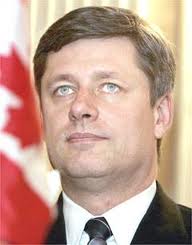
Prime Minister Stephen Harper may be setting us up for real Senate Reform or are we really seeing poor management from the Prime Minister's Office?

Harper: Vision of Canada or seeking Divine intervention


Prime Minister Stephen Harper picked Mike Duffy, Patrick Brazeau and Pamela Wallin for Senate appointments. All of them have generated scandal and stress for his government. Then his Chief of Staff Nigel Wright demonstrated poor judgement bailing out Senator Duffy with $90,000 of his own money.  In addition, Prime Minister Harper has gone through seven Directors of Communication. Does Stephen Harper need a personnel management course?

by Tom Thorne

The Senate Scandal just won’t die. It has real traction mainly because it points to  Prime Minister Stephen Harper all the time and if not him, the Prime Minister’s Office (PMO). The rarified air of the PMO seems to trip up consistently over the past year and the problems arise from appointments made by the Prime Minister.

The Prime Minister’s chief of staff Nigel Wright resigns over providing Mike Duffy with $90,000 to bail him out of his Senate expense fiscal foible. That act showed a complete lack of judgement on the part of the chief of staff. More seriously, since the Prime Minister claims he knew nothing about this $90,000 personal gift it demonstrates that he is out of touch with what happens at the operational levels of his own office. 

The Prime Minister tries to distance himself from all this controversy. But the fact remains that he chose his chief of staff.  He chose the people for senate appointments. He is the person who has gone through his seventh press officer, and he is accountable for the selection of who gets Senate of Canada appointments. His appointments are all currently in hot water. 

With so many foibles it may be time for the Prime Minister to take a course in personnel management. Obviously his judgement for selecting people is lacking. No matter how hard he or his handlers try to distance the Prime Minister from all of this controversy the fact his he is ultimately accountable for the actions of his staff and appointees.

It would be refreshing if the Prime Minister actually admitted that his judgement in choosing these senators and staffers is at fault. That might actually get him some sympathy votes in the General Election in 2015. 

Then there is his promise to alter, change and improve the Senate of Canada. In eight years in power he has not moved one centimeter on this file. In fact he has made the Senate into a laughing stock. Senators who actually try to do something feel truncated and frustrated. More evidence of poor management by Stephen Harper.

Then there is the grumbling in the backbench of the House of Commons. Many Conservative members feel that their views and opinions don’t matter even when voiced in Caucus. Conservative members are frustrated. They are subject to the most tight party discipline in the history of the Canadian Parliament. The executive branch of parliament has become much more dictatorial. It is frankly an old fashioned top down management style that in the Age of Information it is a simply passé way to manage people. Stephen Harper doesn’t seem to realize that.

The Stephen Harper management style is to never be wrong even when things go bad. He is not a collaborative person or at least he doesn’t give that impression. He may be a charming guy in private if you get to know him but his public persona is one of remoteness and control.

When he tries to keep himself dry as the current senate rainstorm continues it demonstrates that when there is trouble he distances himself from the fray. His management style is unfortunately top down and controlling. He does not portray that he is open to discussion.

Why is this? I think it is because of his right wing view of the world. If you hold that everyone is looking for ways to waste public funds you create a centralized bureaucracy where all decisions end up at the Prime Minister’s Office (PMO) to protect the public purse from profligate waste. This act destroys flexibility and certainly truncates any sense that Ministers of the Crown have to exercise their own take on problems and legislation.

The Harper style stifles initiative because decision making is largely focused in the rarified air of the PMO a place where people are worn out by 24/7 work schedules that grind people down to the point that they make dumb errors in judgement. Hence Nigel Wright, normally a smart guy with lots of private sector savvy simply dropped the Mike Duffy ball. Spin has become more important than substance and Prime Minister Harper is now wrapped up in what I call Spin Doctor Blowback.

Spin Doctor Blowback is a condition in time when your public and media relations are no longer credible. You are seen by the public and the media as obscurers of fact and the truth. Your every action is suspect. Recipients of your press releases know that the usual spin has now slipped into managing information and worst yet, permanent damage control. You have no integrity left to work with.

The PMO is in this state. Their credibility is shot. How can they hope to generate a good news story about the Senate of Canada or its ultimate reform? By kicking their miscreant senators out of Caucus they are saying they cannot control these people and what is going to happen to them. They are trying to distance the Prime Minister from the fallout. If integrity still reigned in the PMO the Prime Minister would carry the can for his errors in judgement. He is ultimately accountable not only to his Conservative Party but to the people.

This week the Prime Minister is on his annual Northern Canada tour. The mess in Ottawa continues while he is away trying to generate good news stories. The Auditor General has now decided to explore the fiscal practices of the Senate of Canada for all its members. Senators Duffy, Wallin, Brazeau and also Liberal Senator Mac Harb are launching legal actions. Some of these miscreant senators may now be of interest to the RCMP.  

Is it too cheeky to suggest that we may be experiencing Part 1 of Prime Minister Stephen Harper’s promises to reform the Senate? Perhaps out of crisis and auditing this pork barrel institution will provide Harper with a way to implement his unarticulated promised reforms. Now that could be a way to counter Spin Doctor Blowback for the next Federal Election in 2015.

© 2013 Tom Thorne, All Rights Reserved.


Sunday, 4 August 2013

Auchindrain Township Museum. Will it become a victim of the economic turndown or be seen as an opportunity for Scottish family history tourism?

Auchindrain Township Museum offers a living insight to Scottish Highland life.

Auchindrain Museum: A financial crisis may mean closure of this important Highland Scottish resource.

by Tom Thorne

I must admit a strong bias concerning the fiscal fate of Auchindrain Museum. I descend from Mary Munro the daughter of Martin Munro and Janet McVicar. In 1779 they lived in this township farm with several other families. In 1789 she married John Munro from Drimfern another similar township in the Glenaray. Their first child Duncan Munro (1790-1882) is my fourth great grandfather.

Perhaps you say, so what? 

Well if you are a Scot and your family originates in Argyllshire then you may very well value this important historical resource if you knew more about it. However, if you are simply of Scottish origins then this open air museum is an important place to preserve the way of life of Highlanders from the earliest times through to the 20th Century.

I finally visited Auchindrain in April 2013. It was a moving experience for me to tread between the houses and barns on this site and finally enter the house of Martin Munro where my ancestors lived in the 18th Century recorded as they were in a Census done by the Duke of Argyll in 1779.

No amount of family history research done on line or through books could replace the experience of walking from room to small room in the house of Martin Munro and Janet McVicar. 

Admittedly, not everyone will connect this deeply with this museum. Many will see it preserving the way of life of Highlanders in a very general way. They will appreciate, even without a strong family connection like mine, seeing a way of life that has disappeared as the multiple family townships that Auchindrain preserves and celebrates fell into ruin as more larger general farms expanded sheep, and beef farming and in that process replaced the old ways.

These days most people are engaged in the present state of Scottish life. The past is submerged as the old ways as Scotland figures out whether it wants its independence. Europe, Scotland and the rest of Great Britain are reeling from economic problems with no quick fix in sight. So when it comes time for the past, budgets are cut back or even eliminated.

Museums and other cultural institutions take a fiscal hit first. They are defenseless easy targets unless they are defended by public outcry and action. Auchindrain is one of many Scottish institutions where funding is now reduced or perhaps even drying up completely. Faced with stretching every Pound, even a Scottish nationalist party in power believes it must get out the red pencil for culture and heritage funding. Local governments are equally strapped for funds.

So what is to be done to save important institutions like Auchindrain? First the politicians have to see that without its culture in place and its Highland heritage properly supported any notions of a Scottish state with any ambition to be independent and unique from other parts of Britain, is a fleeting prospect. On the other hand many Scottish politicians of all stripes know this as they pass budgets that force government funding departments to make difficult decisions.

Auchindrain is a major part of the core of how Scotland developed. In the worst excesses of the Jacobite period culminating in the horrific Battle of Culloden in 1746 and its subsequent pillage of the countryside, the townships survived in some form preserving Scotland when all things Highland were forbidden. Tartans could not be worn, bagpipes could not be played. The clan system was dismantled and clan chiefs such as Simon Fraser, Lord Lovat were beheaded at the Tower of London in 1747. The Scottish culture was stressed by external forces that they had difficulty to control in some ways just like today. 

Without some kind of structure in place rural Scotland would have died out completely. And even this social structure was stressed further by later clearances of the people from the land creating Scotland’s biggest export, its people. The townships like Auchindrain enabled people to survive not only as farmers but in trades such as shoemakers, carpenters, stone masons and fishermen. 

My Argyll ancestors did all of these new jobs while living in townships like Auchindrain and further down Loch Fyne at Minard. People torn from the land tried new ways of making a living.  These multiple family townships were like small villages and the fabric that held the countryside together with strong family units often closely related through marriage.

Auchindrain managed to survive as an active farm until the 1960’s. As a result its buildings are in good shape and can be used to set up a model of how Highlanders lived in these places from the 17th Century to our recent times. Scots need to know their history in a living, breathing museum that presents Highland rural life.  Auchindrain provides that service to schools, citizens and many of the Scots diaspora that come to seek their roots as tourists.


Cutbacks and constant funding crises are short sighted. It’s time to breakout and bring more tourism dollars to Scotland.

Most of Europe is still reeling from the economic downturn. Jobs are scarce. Government revenues are down, years of profligate deficit financing are still being dealt with, and each Pound or Euro of revenue brought in by governments has to be assigned carefully to aid the recovery.

Cutbacks in funding for places like Auchindrain are not the way to aid the recovery. In fact, cutbacks of this kind are counter productive to the recovery gaining hold and continuing. What is needed is a rethink of cultural institutions and how they fit into education, and how they link to money earners like tourism and family history research.

One of the best ways to begin the promotion of the Highlands as an attractive visitor destination is to completely examine the business of family and cultural history and how it is presented on the internet. Auchindrain should have this connection to existing family history resources at Scotland’s People. 

Right now we have many good websites each promoting their own activity. However, few of these websites recognize the power of cross promotion offered by the World Wide Web.

If we examine Auchindrain’s website we see an organization set on providing information only. It needs to be motivational, educational and transactional.  A simple change could be that it sells its own tickets on line and for a fee electronic books and materials about the people who lived at Auchindrain. Properly cross promoted with its sister site  Auchindrain’s People, the combined site could become a major Scottish resource about the townships, how they were organized and how visitors connect to family history.

Now cross promote this improved resource to Scotland’s People and you have a major online resource that enables users to search find and connect to the Highlands. Each search purchased on Scotland’s People could provide promotions at the bottom of the page for places such as Auchindrain. The traffic on this important site needs to be used to promote the history of the Scottish people to its users. 

Another cross promotion should be to Scotlands DNA website and other resources of this kind that are connected to the Auchindrain experience. There needs to be a new multi-organizational website created designed to build vital cross promotional activities for Scottish genealogical, historical and cultural institutions. Not only does it promote the individual activities such as Auchindrain but it also shows how to build a tour of the Highlands by walking, bus, car rental, train or ferry.

In Argyll and Bute, the Archive at Lochgilphead needs to be more focused into family history tourism with a presence at Auchindrain through cross promotions online and physically on site. The visitor centre at Auchindrain should maintain its books and materials but expand with packaged materials from the Argyll and Bute Archives done simply with iBooks software. Both of these organizations live hand to mouth for funding they simply need to help each other. There also has to be a strong on line cross promotion to the Scottish National Library.

Inveraray Castle needs to cross promote Auchindrain with a major permanent exhibit of the 1779 Duke of Argyll Census cross linked to Auchindrain and the other townships. This exhibit would enhance the Castle and Auchindrain. My recent visit to the Castle found it a very old fashioned museum with static displays. It should be a focus to promote Argyll history and family history study. This book The Census of the Inhabitants of the Duke of Argyll's Lands in 1779, by Eric Cregeen, was published by the Scottish Records Society, 1963 and needs to be re-published on CD, online as an iBook and in print. It is a major resource to Argyll township life in the late 18th Century.

Governments need to provide funding either from taxes or from Lottery funds. The activities suggested in this brief article need a proper business plan done. BBC Scotland needs to plan for a major 12 part series covering Scotland’s People activity, sites like Auchindrain, DNA family history work and many more related topics. 

This series could be a co-production with the Canadian Broadcasting Corporation  (CBC), TVOntario, The Australian Broadcasting Corporation (ABC), New Zealand and Public Broadcasting Service (PBS) in the United States.  

The Scottish diaspora made a huge impact on these countries and a television series would heighten awareness of Scottish family history resources and most importantly, build tourism of the best kind where the tourists link strongly to Scotland because they belong.

Here are some websites you can explore about Auchindrain Township and Scottish family history.

Auchindrain Township Museum Website: http://auchindrain.org.uk
Auchindrain’s People: http://auchindrain.wikidot.com
Scotland’s People: http://www.scotlandspeople.gov.uk


© 2013 Tom Thorne, All rights waved. Please use this article to help the Auchindrain Township Museum.

Tuesday, 4 June 2013

Duncan Munro moves south to Dumbarton from his Highland home in 1818.

The Clyde Estuary showing the places where the Munros and McCunns lived.


Family history 2: Exploring the Dumbarton Munro Family.
Duncan Munro comes south in 1818 from Inveraray.

by Tom Thorne

We don't know the exact month or year that my great great great grandfather Duncan Munro actually came down to Dumbarton from his Highland Inveraray Glenaray Parish where he was born in 1790. There was annual traffic on established trails that brought  cattle, sheep and farm labourers from the Highlands to southern Scotland. Perhaps Duncan found work on one of these trips and simply stayed on. He was skilled shepherd by the time he arrived in Dumbarton. He learned his trade working with his father John Munro on Drimfern Farm in the Glenaray, the valley of the Aray river that flows to Loch Fyne at Inveraray.

We do know that he married Janet McCunn in 1818. She came from Roseneath a village on the peninsula across Loch Gare from Helensburgh. Janet was born in 1783 and was 35 on her marriage day. Duncan was 28. Janet’s late age for marriage didn’t affect her fertility. In the same year of their wedding (it may have been the reason for the marriage) she gave birth to their first child Agnes on 4 July 1818.  The second child was John born in 1821, and then Peter born in 1823 (see Family History 1) and finally Archibald born 1825. I descend from Archibald’s marriage to Helen Buchanan Mitchell and their second daughter Janet born in 1858.

We know little about where Duncan and Janet actually lived in the early years of their marriage.The fact that they were married in Dumbarton suggests that is where they lived and worked and that is certainly the case from the 1841 Census onwards. Janet McCunn’s father Peter McCunn and mother Agnes McFarlane lived on Fern Brake farm in Rhu Parish in the Helensburgh-Roseneath area close to Dumbarton. All of these towns and villages are on the Clyde River Estuary where it turns towards the sea. 

Peter McCunn died in 1809 and Janet’s mother Nanny (Anne) and sometimes also Agnes McFarlane died in 1820, according to the grave stone put up by their son in law Duncan Munro. This stone is in Rhu Parish Cemetery, Plot 71.  I found their stone on my trip to Scotland during April 2013. The stone was lying down on the grass and had it toppled the text side down I would have never found it. The stone was also covered with lichen and the only word that could be seen when I first located it was  “CUNN”. I scraped off the lichen with a 50p coin revealing this text:

DUNCAN MUNRO
IN MEMORY OF MY FATHER IN LAW
PETER McCUNN
FARMER FERN BRAKE
DIED APRIL 1809
AND NANNY McFARLANE
HIS WIFE DIED JULY 1820


Duncan Munro erected this gravestone for his McCunn parents in law.


The stone was also surrounded by several McFarlane graves and this was the another clue I had to intensify the search in that area of the cemetery since I had no cemetery plan to find Plot 71. 
How well Duncan knew his father in law is debatable. His marriage to Janet McCunn in 1818 suggest that he may never have met him since Peter McCunn died in 1809. The sentiments on the gravestone suggest that he did know him before his marriage to Janet.  Was Duncan in the Dumbartonshire area before the marriage? In 1809 Duncan would be 19 so it is very possible. 
Earlier documents dating from 1780 show three Peter McCunns living on farms owned by The Duke of Argyll in the Roseneath area. This part of the Duke’s census of the people living on his properties in 1779-80 only provides the names of males over 12 years old and so is almost useless to discern very much about the Roseneath McCunns or the McFarlanes of that time. 
However one farm that one Peter McCunn lives on is called “Ferncarry” and the men “over 12” living on it include: Andrew McFarlane, Donald McFarlane, Duncan Campbell, Duncan Campbell junior, John Campbell, Donald Campbell, Duncan McAllum, Dougald McFarlane, Archibald McKeller, James McKeller, James McKeller and Peter McFunn.
Peter McFunn or McCunn are interchangeable surnames in the late 18th Century. My guess that this is the right Peter McCunn comes from the name of the farm “Ferncarry” which is close to “Fern Brake” found on Duncan Munro’s memorial grave stone to his parents in law. The number of McFarlane men listed on this property is also a clue. However we can never really know because unlike the 1779 Duke of Argyll’s Census done in Argyllshire no women with their maiden surnames, or their children are recorded .

The Roseneath area McCunns (or McFunns) are also concentrated on Barber Farm with Turners and Chalmers families. One of the men, Duncan McFunn may be Peter McCunn’s father but these obscure records leave only tantalizing guess work and speculation. 

At this time we are also plagued with no record for Peter McCunn’s marriage to Anne (Agnes) McFarlane, however all their children are recorded and all of them were born in Rhu Parish, Roseneath:  John McCunn 1775, Archibald McCunn 1780, Janet McCunn 1783, Mary McCunn 1787, Peter McCunn 1789, Dugald McCunn 1792.

An aside: Dugald McCunn’s daughter, Jane McCunn, age 6, is found in the 1841 Census living for some reason with Janet McCunn and Duncan Munro at “Spouts” the shepherd’s cottage high on the hills behind Dumbarton and Old Kilpatrick. This child opened up the discovery of  her father Dugald McCunn and his wife Jane McKeller (another Roseneath 1780 surname) through their marriage record in 1828 that take us to Inverkip Renfrewshire just across the Clyde River from Dumbarton. Jane McCunn, was born in 1834  at Old Kilpatrick very near to where she is found with Duncan and Janet Munro in 1841. This suggests that her parents lived nearby (walking distance) to the “Spout” shepherd’s cottage. Jane also had a brother Daniel McCunn also born in Old Kilpatrick in 1836. There were also McKellers living at Roseneath in 1780 Duke of Argyll Census.

By combing birth index records one Peter McCunn was born about 1753 which would make him 56 at his death in 1809. We do better with Agnes (Anne, Nanny) McFarlane who is likely the daughter of Daniel McFarlane and Katherine Wilson born in 1754.  This is a strong choice because her son Dugald’s first son was also Daniel and this would follow traditional Scottish naming patterns.  

Agnes McFarlane McCunn died in 1820 when she was 66. Duncan Munro unfortunately recorded only Peter and Agnes’ death years on the stone at Rhu Cemetery which makes it more difficult to find the birth years of his parents in law.

Next we explore the lives of Duncan and Janet Munro and what happened to their family from 1841 to the turn of the 20th Century.

© Copyright 2013, Tom Thorne, All Rights Reserved.


Friday, 31 May 2013

Discovering Scottish Roots: I find Peter Munro 1823-1857 at Aberfoyle.


Discovering My Scottish Roots 1: 
Looking for Peter Munro at Aberfoyle Cemetery and unravelling his Stirlingshire connections.

by Tom Thorne

Readers may recall that earlier this Spring I wrote about my impending trip to Scotland. The purpose of this trip was to hammer home some loose ends concerning my family history research and also to experience the ground where my Scottish ancestors trod. Getting on the ground makes research tangible at least for me. It was, I admit, also a bit of a bucket list item for an aging septuagenerian. 

However in pursuing this bucket list item I can only report that it was a very useful and interesting thing to do. I connected into Edinburgh Airport completely jet lagged from a flight from Canada to Brussels and a wait for the flight to Scotland that entailed hanging about the Brussels airport for almost a full day. 

I had exhausted the bright lights of the duty free area of Brussels Airport in about ten minutes where the bookstore offered only trashy potboilers and books that solved such problems as proper household budgeting and making a mint  on the stock market. In my tired state I decided to close my eyes and rest. However the hard seats negated any real attempt to rest. Finally, I boarded an admirable Canadian built turboprop Dash 8 for Edinburgh in the middle afternoon.

Once in Edinburgh I got my rental car painlessly and took off down the road to the closest Travel Lodge where I sacked out until morning. It was a bit disconcerting driving on the left side in my fatigued state, but the hotel was only two kilometers from the Airport so I made it in once piece. Much is made by those of us schooled in right side driving about adapting to the left side of the road. I  usually find it a painless exercise only slightly more harrying when a need for sleep is really your first priority.

The next morning (12 April 2013) I started the real family history quest. I installed my GPS in the rental car and it lit up perfectly with my Edinburgh location. I set it for Aberfoyle a village in Sterlingshire and headed out. My ultimate destination that day was my Bed and Breakfast in Bonhill near Dumbarton, but the short Aberfoyle detour enabled me to explore the graveyard where Peter Munro was buried in 1857.

Peter Munro was the son of my great great great grandfather Duncan Munro (1790-1882). His mother was Janet McCunn (1783-1869) and he was the third child of a family of four. The eldest was Agnes Munro born 1818, John Munro born 1821 and Archibald Munro born 1825.  I descend from Archibald Munro through his daughter Janet Munro (1858-1898) and her “natural” son Andrew Mitchell Munro (1879-1948).

Peter Munro was a farm labourer who worked mostly at Drymen in Stirlingshire. I searched for his head stone in the rain. The older part  of Aberfoyle cemetery on Manse Road is in poor shape. Many stones are covered by lichen or worst yet, toppled text side down.

One stone, however, caught my eye. It was very simple, worn, and its text was covered by lichen. Later in the trip I would find another stone erected by Duncan Munro in 1820 at Rhu Cemetery at Helensburgh in the memory of his McCunn parents in law and it proved to be a similar simple stone like this one. I spent a long time looking for Peter Munro’s grave in the rain and the stone below, I believe, is his memorial erected by his father.  Along the grass line is the engraved text “Munro” found by careful scrutiny of the photo and on site.


This is Peter Munro's grave at Aberfoyle Cemetery in Stirlingshire. In the right hand bottom corner along the grass line
is the engraved word "Munro" just barely visible through the lichen growth on the stone.


We know that Peter Munro is buried at Aberfoyle Cemetery because it is recorded on his death certificate, although the on line Cemetery list of graves does not show him which is understandable seeing the condition of his and other gravestones. 
He died of “gastric fever six weeks” at Fintry a nearby village, not far down the road and near Drymen where he had also worked as an agricultural labourer from at least age 17. The 1841 Census records show him in the Parish of Buchanan at Ross Mcalpine Farm. at that age.  Later in the 1851 Census records we find him at Gartenbrodnack Farm at Drymen aged 27.
He was 34 at his death and was born at Dumbarton in 1823. There is no mention of his wife Agnes Blair a local woman whom he married at Drymen in 1853 nor their son Duncan who was born at Fintry in 1854.
His father Duncan Munro came up from the Bonhill-Dumbarton area to take care of the funeral arrangements. We know this because he signed the death certificate. To go by car today from Aberfoyle to Dumbarton is about 45 minutes to an hour. This would be a three day trip in 1857 for Duncan who was 67 years old at that time. 
In the 1851 Census  Duncan Munro is living a long way from Fintry and Aberfoyle on the Strathleven Place estate near Dumbarton town with his wife  Janet McCunn and two unmarried sons John and Archibald both “fleshers” or butchers. In addition, the future wife of Archibald Munro, and my great great great grandmother, Helen Mitchell (born 1831) in Barony Glasgow is also living with them. She is described as a “House Servant”. She was likely working for someone else. Duncan and Janet could ill afford any servants.
Peter Munro lived a short life and the fate of his family is not known at this time. What we do know about his wife  Agnes Blair and her family comes from a 1841 Census tract. Here is her family. They are living on a farm called Blarnabord also near Drymen. I have added the birth years. The 1841 Census is somewhat irritating because it does not record the county origins of people not born in the Census area, hence the “Outside Census County” designation.

Blair Walter M 55 Farmer Outside Census County born 1786
Blair Margaret F 45 Outside Census County born 1797
Blair John M 15 Stirlingshire born 1826
Blair Walter M 13 Stirlingshire born 1828
Blair Agnes F 11 Stirlingshire born 1830
Blair Janet F   6 Stirlingshire born 1835
Other people are also on the farm, some of interest with the name Blair. There is another Walter Blair age 40.

Blair Walter M 40 Outside Census County born 1801
Blair James M 55  Dyke builder Stirlingshire born 1786
Blair Duncan M 15  Agricultural lab. Stirlingshire born 1826

Others on the farm are: Alexander McGregor 15, Agricultural labourer from Stirlingshire; William Thomson, 15, Agricultural labourer from Outside Census Country; Christina McLaren, 20, Female Servant, Outside Census County; Christina Campbell, 15, Female Servant, Outside Census County; Robert McKay, 40, Dykebuilder, Outside Census County. 

We don’t know whether Walter Blair, 55, was a tenant or a land owner. The number of farm labourers suggests a farm that was at least a going concern.  Agnes Blair is 11 years old which makes her birth year 1830 seven years younger than her future husband Peter Munro. That would make her 23 at her marriage at Drymen on 7 June 1853 and Peter would have been 30. The birth of their first child Duncan Munro (named after his paternal grandfather)  on 1 November 1854 at Fintry, comes after 18 months of marriage. 

Going back to Peter Munro’s 1851 Census reference in Drymen at Gartonbrodnack Farm Peter worked as a “farm servant”  for a Gavin Paterson who was a shepherd. Sheep farming was something Peter knew well. His own father, Duncan Munro was a shepherd all his life. By this time the 1851 entry reveals Peter’s birthplace as “Dumbartonshire-Dumbarton”.

© Copyright 2013, Tom Thorne, All Rights Reserved.

Wednesday, 15 May 2013

Reporting on some promising signs as the Brussels Airport baggage handlers try to put a good face on their wild cat strike.

Brussels baggage handlers watch airline administrative staff load planes with customer suitcases.


I have just learned from a very reliable  airline source at 1615 hours today that my airline's administrative staff have been loading their own planes under the somewhat hostile eyes of wild catting Swissfort baggage handlers.  Today I was critical that my airline's phones were not answered. The reason they were on the tarmac making certain customers are served. I suggested that they place a message on their phones saying what they are doing and how their customers come first.

Apparently other airlines seeing the initiative of the Jet Airways staff are following suit. It is good to hear that practical solutions are now underway to clear the stranded passengers. Apparently talks are still underway to solve the problems of the wild cat strikers. These talks apparently have senior management  from the Swissfort company, government labour officials, the airport management and of course the striker's bargaining team.

In addition affected airlines are clearing their stranded passengers by routing them  to other airlines not affected by the strike. Not all airlines use Swissfort at Brussels Airport so this is possible.

What I find somewhat irritating is the fact that when I was in the airport on 14 May the Swissport strikers came out of the baggage handling areas and performed a noisy demonstration in the passenger terminal. It was irksome as a stranded passenger to have to put up with this type of stupid bravado. Some older passengers were shocked by this blatant disregard for the dilemma strikers had created by their wild cat strike actions. 

My source tells me that the baggage to be cleared from the first days of the strike down in the sorting area is large and chaotic. Hopefully now this silly strike ends and baggage handlers return to normal. However in the offing are strikes by air traffic controllers. The European labour unions need to get a dose of reality about the economic effects this kind of action has on tourism and business for the Euro Zone. 

© Copyright 2013, Tom Thorne, All rights reserved.


Day four of the Brussels Airport baggage handlers strike. Is a settlement near? Is there any other choice?


The Great Silence has descended on the Brussels Airport baggage strike. Is it a good omen that a settlement is near?

by Tom Thorne, Brugge Belgium 15 May 2013

In the world of labour relations often the Great Silence descends as the sides of a dispute get down to the short strokes, solving their problems and finally agreeing. The Brussels Airport baggage handler's strike may be in that mode at the moment.

We can only hope that this silence is a good omen. This morning no one was answering calls at my airline or answering my emails for information. Yesterday I contacted Swissfort the company the baggage handlers work for, asking them to comment and to this moment they have not replied. 

My guess and hope as a stranded passenger is that the silence and the lack of rhetoric signals progress. My wife and I just want to go home. Apparently senior Swissfort managers are at the table along with representatives of the Belgian government's Ministry of Labour. 

The negotiators will all be tiptoeing around the issues so no one's nose is out of joint and the political facts of labour-government-management are not tipped too far from the usual status quo as Europe wallows in its recessional woes.

Now here is some food for thought for the airlines involved. Information flow to passengers is very important and thinking out of the usual box is also needed in a crisis like this one. The trouble with this idea is the very company in negotiations with the baggage handlers provides the check in and other passenger services too.

So a big firm like Swissfort has the power to control an airport while they go about dealing with their unions often at the expense of passengers who are caught up in their corporate ethos. Swissfort is such a company. They are big and provide all aspects of services to freight haulers, airlines and airports. They are probably too big. A recent poll of their employees ranked their management as remote and uncaring. If that is the attitude around the table it is a recipe for disaster and mistrust.

When their services are working all parts of contemporary travel by plane seem to work well. The check in is good the baggage systems rarely fail or loose luggage. The public and the airlines and the airports are happy. However in the case of Brussels Airport Swissfort holds lot of the business and in the case of this baggage strike a vital and sizable part of service to passengers is compromised when there is a labour action.

The current baggage handlers believe they are understaffed and overworked. That may be true because turfing 25 kilo bags around can be tiring. However this notion of entitlement in contemporary European labour relations is being severely tested by the recession's impact on labour demands and expectations contrasted against management's view of profitability of their operations. More people on the baggage lines means more costs and those costs could very easily these days be invested in automation in the next few years rather than into pay packets for unhappy or surly workers with status quo high expectations.

So we are faced as passengers with the results of an economic European recession playing out in the bowels of the airport baggage handling. The truth is European labour and its lax laws is in a state of change and a dose of reality. Too much is expected and the pretense of business as usual remembering the good old days of post war expansion of business and the Euro social programs is now under great stress throughout the Euro Zone. That is the context I am experiencing as a passenger just wanting to go home with my luggage.

© Copyright 2013 Tom Thorne, All Rights Reserved

Tuesday, 14 May 2013

Wildcat strike lands body blow to Swissport management and its airline clients. The real stress is on stranded passengers.


Brussels Airport: A baggage strike by Swissport employees strands thousands of passengers.

by Tom Thorne, Brugge Belgium, 14 May 2013

Sunday 12 April 2013 was an interesting day at Brussels Airport. The baggage handlers working for Swissport decided to pull a wild cat strike throwing the airport into a logistical nightmare of not being able to load any bags or unload passenger luggage without long waits.

Admittedly I have a bias in all of this. I am a Jet Airways customer and I was scheduled to return to Canada from Belgium on their flight 230 on 14 May. It never happened. My wife and I spent 205 Euros getting our two large bags, and ourselves with hand luggage to the airport . When we arrived we could not check our bags and so we returned to Brugge. We are lucky we are back with relatives hoping that before Thursday we will see a resolution to the strike.

While we were at the airport we experienced one spark of hope. An employee of Jet Airways told us that if we could lug our bags and hand luggage through security they would be loaded by employees of the airline on the tarmac.  My wife and I said we would give it a try. This proved to be false hope although we were in a joyous line believing that we would get a boarding pass for a promising five minutes.

The airline stated it could not accept baggage with no baggage handling in place and so we were saddled with a decision they gave us to rebook or perhaps even abandon our luggage if we wanted to go home to Canada today. The airline would take no responsibility for our bags. We took the rebook option for Thursday 16 May when hopefully this strike will be over. If it's not over then we are stuck in Belgium until it is or until Jet Airways gets us out in some way, a probability being weighed according to a Jet Airways source I spoke to today.

Airline employees were seen moving checked luggage from Monday 13 May to another location on a small cart. Back and forth they went with large loads of checked bags that went no where when their owners flew out. When will these bags be delivered? No one could say and they were now a problem to store.

The striking employees are negotiating with their employer Swissport a large multifaceted company based in Zurich that provides airlines with ground and cargo services. Examining their website media releases for some word about the strike, readers are met with their awards they received as a "leader" in their field. There is no mention of their current deadlocked negotiations with their union at Brussels Airport.  Today I contacted them by email for a statement. At time of publication I have no answer.

To this point in time the Belgian Government is no where to be seen intervening in this strike. Knowledgeable Belgians I know tell me that the government and unions are topics that are highly political and that government action will be perhaps be not visible because of potential political fallout.

If that is so then the union has a lot of aces to play and this strike could be prolonged. That would call into effect the government's responsibility to act for the greater good of the public and  the reputation of Belgium as a tourist location.  In addition, Belgium  needs to seen as a good place to do business. A country where labour and management are more in balance and not so polarized as they are in this case.


The story continues.

© Copyright 2013, Tom Thorne, All Rights Reserved